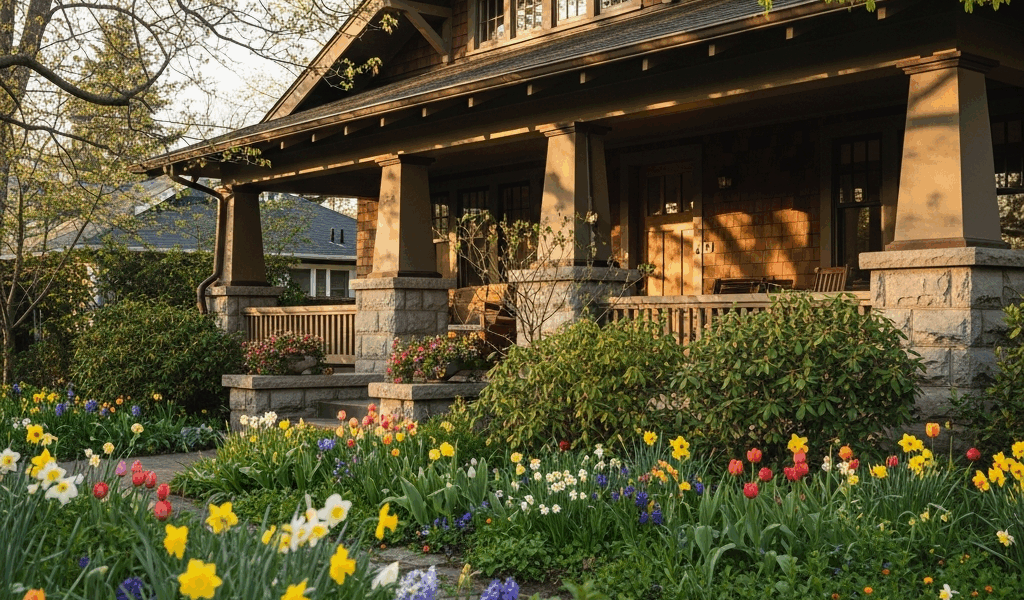
Craftsman homes were built to last, but “built to last” doesn’t mean “zero maintenance.” The thick tapered columns, wide eaves, and exposed rafter tails that give Craftsman houses their character also create specific maintenance needs. Spring is the time to address them, before summer heat and fall rain make small problems worse. Here’s a room-by-room checklist for keeping your Craftsman home in solid shape.
Exterior: The Big Three
Inspect the porch columns and bases. Craftsman porches are iconic — and they’re also moisture traps. The bases of tapered columns and the porch deck itself are prime spots for wood rot, especially where water pools or snow sat all winter. Press a screwdriver firmly into the wood at the base of each column. If it sinks in easily, you’ve got rot. Small spots can be treated with epoxy consolidant and filler. If the damage extends more than a couple inches, you’re looking at a column base replacement — still manageable as a DIY project if you support the porch roof with a temporary jack post first.
Check exposed rafter tails. Those decorative rafter tails extending past the eave line are one of the defining Craftsman details, but they’re fully exposed to weather. Look for cracking, peeling paint, and soft spots. Scrape, prime, and repaint any bare wood before moisture gets in. If you’re repainting, use a high-quality exterior primer on bare wood and two coats of acrylic latex paint. Oil-based paints last longer on horizontal surfaces but take longer to cure.
Clean and inspect gutters. Craftsman homes often have wide eaves with integrated or half-round gutters. These collect debris faster than standard K-style gutters because of the overhanging roof lines and nearby trees (Craftsman homes tend to be on established, tree-lined lots). Clear all debris, flush with a hose, and check for any sections pulling away from the fascia. Reattach with appropriate hangers — don’t just add screws to rotted fascia board.
Windows and Trim
Original Craftsman windows are typically double-hung wood sash, and they need annual attention. Check the glazing putty on each pane — cracked or missing putty lets water behind the glass and into the sash, which accelerates rot. Re-glazing a window takes about 30 minutes per sash with a putty knife and a can of DAP 33 glazing compound.
Test the operation of each window. Wood windows swell and stick seasonally. If a window won’t open, don’t force it — run a utility knife along the paint seam between sash and frame, then try again. A stuck window is often just paint bonding, not a structural problem. Lubricate the tracks with a dry silicone spray or a plain candle rubbed along the channel.
Examine all exterior trim for paint failure. Craftsman trim tends to be thick and well-milled, which means it holds up structurally even when the paint is failing. But exposed bare wood absorbs water quickly. Spot-prime and paint any areas where you can see bare wood. A quart of matching paint and a good brush is all you need for touch-ups.
Foundation and Basement
Many Craftsman homes have basements or raised foundations with concrete or stone piers. Walk the perimeter and look for new cracks in the foundation wall. Hairline cracks are normal in older concrete. Cracks wider than 1/4 inch, stair-step cracks in block walls, or any crack that’s actively leaking water deserve professional evaluation.
Check that the grade slopes away from the foundation on all sides. Over time, soil settles and garden beds get built up, creating spots where water flows toward the house rather than away. You want at least a 6-inch drop over the first 10 feet away from the foundation. Adding soil to correct the grade is a simple afternoon fix that prevents expensive water damage.
Interior: The Details
Craftsman interiors feature built-in cabinetry, plate rails, and wood paneling that need periodic attention. Tighten any loose hardware on built-in cabinets — original Craftsman hardware was often mounted with small screws that loosen over decades. If screw holes are stripped, fill them with a glue-dipped toothpick, let it dry, and re-drive the screw.
Inspect wood floors for finish wear, especially in high-traffic paths. A worn finish lets moisture reach the wood, which causes cupping and staining. You don’t need to refinish the entire floor — spot-screening and recoating the worn areas with matching polyurethane extends the life of the overall finish by years.
The Priority List
If you can’t tackle everything at once, prioritize water management: gutters, grading, column bases, and window glazing. Water is what damages old houses. Everything else — paint touch-ups, hardware tightening, floor care — can wait a season if needed. But water problems only get worse with time, and they get expensive fast.
Craftsman homes reward attentive maintenance with decades of solid service. Spend a weekend each spring working through this checklist, and your house will keep its charm for the next owner too.



Stay in the loop
Get the latest craftsman charm updates delivered to your inbox.